
Simple Cooking
A recipe for shanks, food-friendly wine, and some sort of explanation.

What good is it to know how to cook?
Hi, my name is Ian and I spend a lot of time thinking about, reading, and cooking food.
What value does it bring to me? What value does it bring to us? Is it a good use of time to spend an inordinate amount of mental energy and small feats of physical toil constantly contemplating what's for lunch, dinner, and, on some occasions, what to drink during these activities?
Would my time be better spent elsewhere? Should I put the same gusto into how I want to cook venison shanks (really the question is not so much how but with what?) into my professional work? Compared to thinking about the best way to make braised shanks with cannellini beans, mint, and couscous, boning up on my department's latest SEM strategy and budget hardly seems worth it.
Everyone has to eat. To paraphrase Jim Harrison, you've got to eat at least two meals every day for the rest of your life, so you might as well get damn good at doing it. In the last half decade, and more recently, the last couple of years, I have started to go after this whole conundrum of feeding yourself with the same level of thought and commitment a lot of folks put towards graduate school. The amount of reading I've done on the subject rivals most course loads. (Kidding).
It at times can seem silly, but with a passionate interest has come an understanding and argument aimed at the heart of any who seek to dismiss with a subtle eye roll or wave of the hand my staunch stance on cooking and curiosity about food. Why should something so fundamental as feeding yourself well be reduced to a whimsical hobby? To be clear most of these “conversations” happen in my head or sprout from explaining what I cooked for dinner to someone at work. Real internal monologue bullshit.
I think the best I've heard this subject explained, and I'll try and dig into this deeper down the line, is knowing how to cook well for yourself and others can function as a blueprint on how to live well and within your means. When I read great writing about cooking and eating, implicitly, they say, "You can experience this; this sense of accomplishment, joy, community, love, and purpose by doing these things. Doors will be opened. Colors of the world vivid and revealed. I will show you."
I'm certainly not the only one who gets excited about this stuff. There is a bloat of content across the Internet and streaming services devoted to food and cooking: just scroll through Netflix for the latest cooking competition show, endless amounts of Youtube, Instagram, and Tiktok videos, or the relatively recent boon (to me, anyway) of Substacks.
Which makes me think why the hell am I doing this? I want to add to the noise? In what world do I have anything of interest, or value, to say ? I did not go to cooking school. I have never worked in a restaurant. The amount of self-doubt I have about starting this does threaten to spill forth and make me select all, delete; forget the damn thing.
But then again, why the hell not. I need a creative outlet beyond the kitchen and if only my immediate family and a few close friends read this it'll be worth it. I have zero expectations or hard goals for this. Just that on a weekly or bi-weekly basis it will be fun to share more long-form views on cooking, on recipes, on wine, and the feeling of contentment they bring. That’s enough.
This newsletter will deal with these topics. At times directly and at others more passively while explaining why it just makes sense to pan roast your stew meat in the oven. I am not a writer or a chef. I am an enthusiastic home cook staring down his early thirties and seek to calm my mind by chopping vegetables, braising meat, making a salad, reducing stock.
If you've read this, thank you. I hope you'll stick around.
Venison shanks with beans, couscous, and mint: adapted from John Thorne’s Simple Cooking
4 shanks, about 2.5 pounds, salted( I had venison, the recipe calls for lamb. Either will work. Salt the night before if possible).
8 oz dried cannellini beans
1 cup pearl couscous
1 medium onion, diced
2 garlic cloves, sliced
1 tablespoon tomato paste
1 cup dry red wine (when I cook with wine, I tend to use Bota or Black Box. They’re great value as a cooking wine and you can keep them around once opened for quite a while. I don’t drink them by the glass, but since most of the wine I have on hand isn’t stuff I want to use to deglaze or braise with, I’ve found these a perfect fit).
Pinch of cinnamon
Half a lemon
Handful of mint
Salt and pepper to taste
Presoak beans in cold water for at least an hour. Put beans in a large stockpot, one large enough to hold the shanks, and bring to a simmer. Simmer for about an hour.
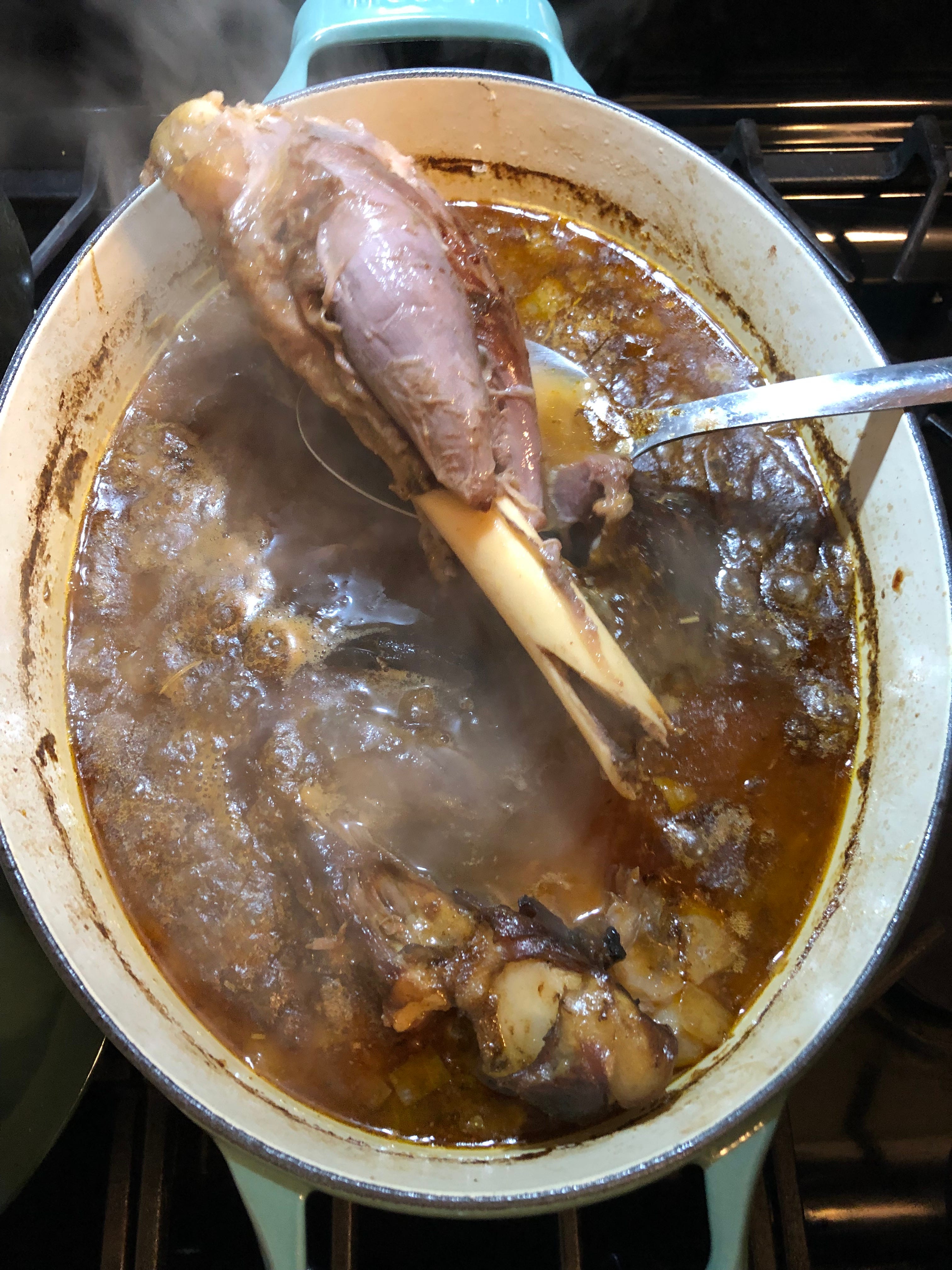
Pour about a tablespoon of olive oil into the dutch oven and brown shanks over medium heat. This may take upwards of 15 minutes or more, depending on how many shanks you can nozzle in. Add to the beans. Add enough water, or stock, to cover the shanks. Simmer for another hour.
And the onions and cinnamon in the dutch oven until they are translucent then add the garlic. Add more oil if you need it. Stir, and add tomato paste once the garlic takes on some color. Pour in the red wine and deglaze, scraping all the great brown bits from the bottom. Remove the shanks from the stockpot and add to the dutch oven. Strain the beans but reserve their cooking liquid. Add the beans in with the shanks, and add enough bean liquor to cover shanks.
Put the lid on and put in the oven at 300 F for 2 hours, or until the meat shreds apart very easily. Remove from oven, and remove the shanks. Shred the meat off the bones and give bones to a very happy cat. Add the couscous with the lid off and let simmer until cooked. Add the meat back in, add the lemon juice and adjust for seasoning and taste with salt, pepper, and white wine vinegar, if needed.
Plate, and top with chopped mint. Serve with a really good bottle of red. I chose a Crozes-Hermitage.
Incredibly food-friendly wine
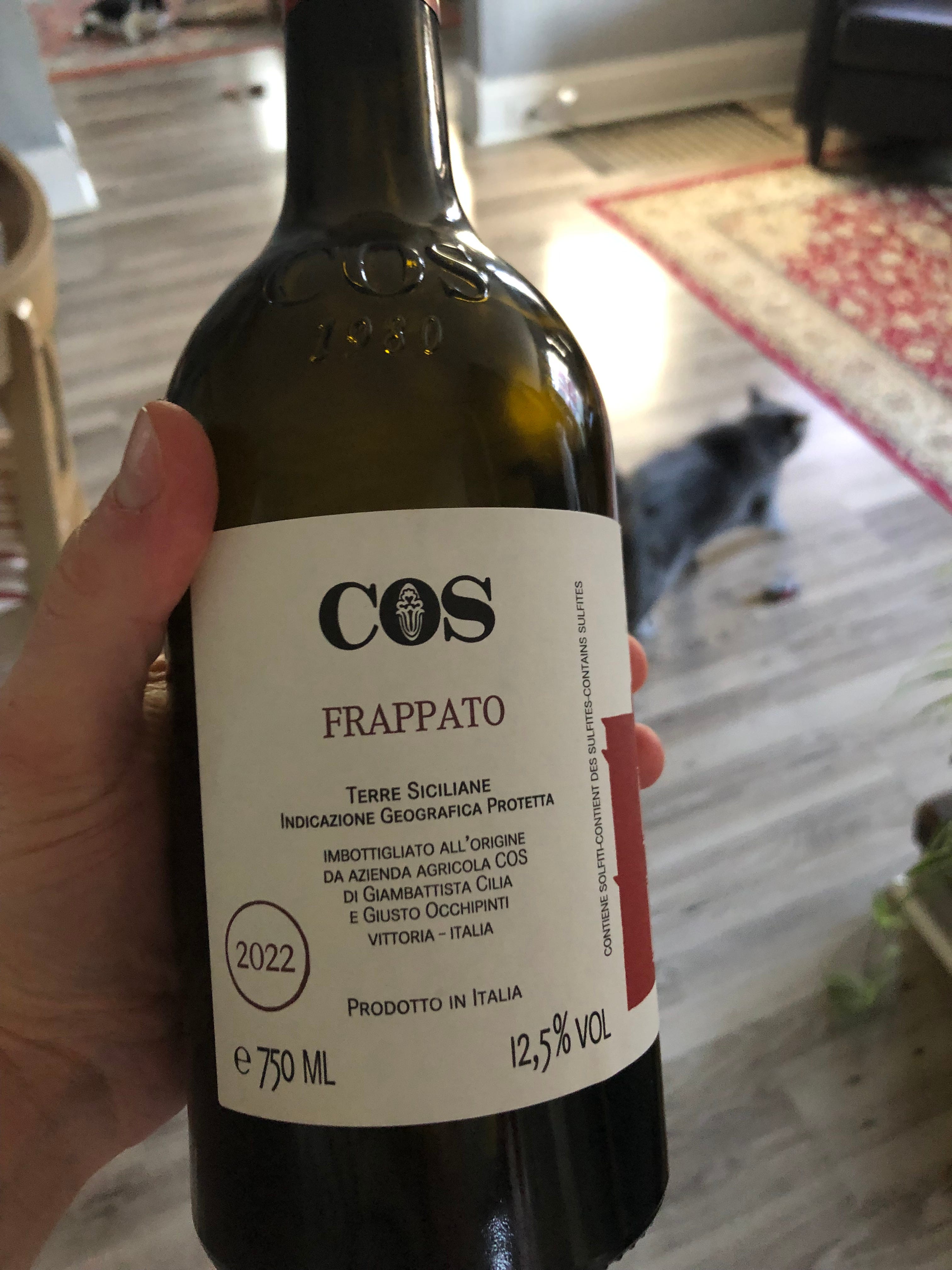
Frappato has become one of my favorite wines to pair with a lot of different food. A grape native to Sicily, in my mind, it reminds me of Pinot Noir. Light in alcohol and body, medium-high acidity, but with a taste profile to stand up equally to salads, pulled pork, pasta, chicken braised in tomato — anything you want to throw at it, frappato accepts the challenge with grace. I shared some of the bottle pictured above with some friends over a long evening of an assortment of food. Pick up a bottle if you can find one and pair it with whatever you eat next Thursday.